

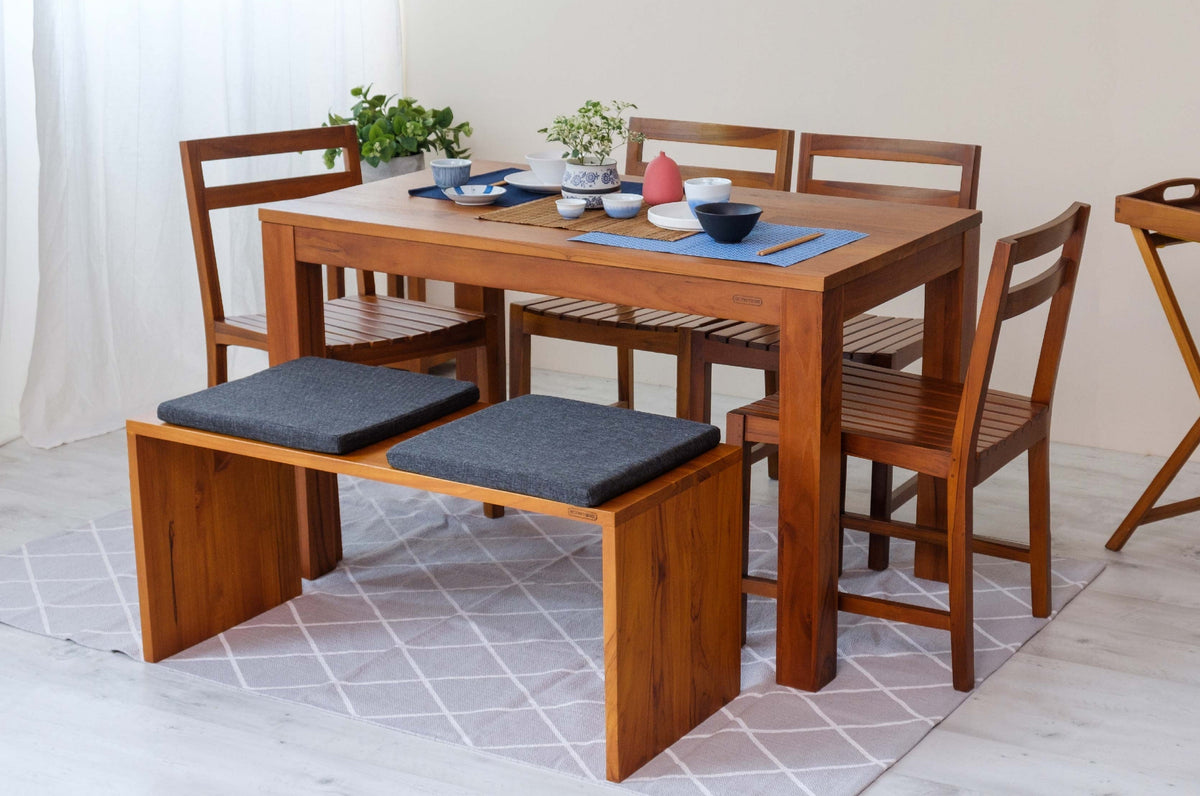
Why People Worry About Wood in Singapore's Climate
Anyone shopping for a dining table in Singapore has probably heard the warning: wood won't survive this humidity. It's an understandable worry. Our air is humid for most of the year, and most homes run air-conditioning for hours at a time. A table in a typical HDB or condo moves between warm, damp air and cool, dry air almost every day.
Because of this, many homeowners hesitate before buying a solid wood dining table. Some switch to sintered stone or engineered surfaces to play safe. A lot of the advice behind that decision is only half true, though. Here we look at the common myths and the facts, so you can choose a wooden dining table in Singapore with confidence.
Myth: Solid Wood Always Warps or Cracks in Humidity
What Actually Causes Warping
Wood is a natural material that responds to its surroundings. It takes in moisture and releases it, expanding and contracting slightly as it does. That gentle movement is normal. Serious warping or splitting usually comes from how the table was made, not from humidity alone:
- Poor wood selection. Low-density or fast-grown timbers move more, and boards cut without regard to grain are more likely to twist or cup.
- Inadequate manufacturing. Timber that isn't dried properly before building keeps shrinking afterwards, which opens up gaps and splits.
- Construction that fights the wood. When a tabletop is locked rigidly in place, stress builds as the wood moves and eventually shows up as a crack.
It also helps to know what's normal. As solid teak ages, it can develop fine surface lines called "checks". These are a natural part of the wood's character and don't affect its structural integrity. They're a sign of real timber, not a defect.
How Proper Kiln-Drying and Joinery Prevent It
Quality construction is what makes any solid wood table stable in tropical conditions. Two things matter most.
Kiln-drying: Before building begins, the timber is dried in a controlled kiln to a moisture level suited to its future home. Wood that starts close to balance with its surroundings moves much less once it's in your living room.
Time-tested joinery: Traditional techniques such as mortise and tenon, dove lap, finger (box comb), mitre and scarf joints join wood securely without depending on nails or screws. Well-made joints hold the table together while still letting the timber breathe and move naturally. That's why a well-built solid wood dining table stays flat and sturdy for decades.
Myth: Sintered Stone Is the Only Low-Maintenance Option
Where Sintered Stone Does Perform Well
Sintered stone has real strengths, and they're worth acknowledging. It's made by fusing natural minerals under intense heat and pressure, which gives it:
- High heat resistance. A hot pot is unlikely to mark it.
- Good scratch resistance in everyday use.
- A non-porous surface that most spills wipe off without staining.
For kitchen worktops and heavy cooking areas, these are clear advantages.
The Trade-Offs Buyers Often Overlook
As a dining table, sintered stone comes with trade-offs that aren't always mentioned in the showroom:
- Weight. Stone-top tables are heavy, which makes delivery, moving house or rearranging a room much harder, especially with narrow corridors and lifts.
- Cost. Large, good-quality slabs often cost as much as or more than solid wood.
- Edge chipping. The surface is hard, but edges and corners can chip if knocked. A chip in stone can't simply be sanded out, while solid wood can be repaired and refinished.
- A cooler, less homely feel. Many buyers find stone cold to the touch and a little clinical. Wood brings warmth, natural grain and character to the heart of the home.
"Low maintenance" also depends on what you mean. Solid teak is known for needing very little care. A regular wipe and occasional oiling keep it looking good, and it can be restored after years of use instead of replaced.
Fact: Teak Is Naturally Suited to Tropical Humidity
Why Teak's Natural Oils Matter
Good manufacturing helps every solid wood table. Teak adds a natural advantage of its own, one that comes from the tree rather than the workshop:
- Rich natural oils. Teak contains natural oils that are highly water resistant. They help protect the wood from moisture, decay, insects and bacteria, and make it very resistant to termites.
- Density and strength. Teak keeps its strength while staying workable for fine joinery, so it can be shaped into elegant designs without losing durability.
- Durable even untreated. Teak holds up well even without oil or varnish, which is why it has long been used for boat decks and outdoor furniture.
Teak grows naturally in tropical Southeast Asia, so it's already at home in a climate like ours. Scanteak uses plantation teak from Indonesia, whose teak is widely regarded as among the finest in the world. It's legally sourced and verified under SVLK, Indonesia's timber legality assurance system, with a new tree planted for every one felled.
How Teak Compares to Other Common Timbers
| Timber | How it performs in Singapore conditions |
|---|---|
| Teak | Naturally oily, water resistant and highly resistant to termites and decay. One of the most climate-appropriate choices for tropical homes. |
| Mahogany | Attractive and fairly stable, but with less natural oil than teak, so it relies more on its finish for protection. |
| Oak | Strong and hard-wearing, but suited to temperate climates. It can react more to large swings in humidity. |
| Softer woods (e.g. pine, rubberwood) | Lighter and more affordable, but more prone to dents, movement and moisture or pest damage without careful treatment. |
How to Keep a Solid Wood Table Looking Its Best
Simple Maintenance Habits
Caring for a teak dining table, or a matching wooden bench, is simple:
- Clean gently. Use a soft cloth with warm, mildly soapy water, then dry the surface thoroughly.
- Oil occasionally. Once to a few times a year, pour a small amount of teak oil onto a dry cloth (never directly onto the furniture) and apply two or three thin coats. Make sure the wood is fully clean and dry first. Over time, this helps teak develop its rich, golden-brown shine.
- Avoid direct aircon vents. Sudden, extreme temperature changes make wood expand and contract more. Position your table away from the direct airflow of air-conditioners.
- Manage humidity. In particularly damp rooms, a dehumidifier helps prevent moisture build-up and mildew.
- Wipe spills promptly. Keeping wood dry prevents stains and mildew.
Common Mistakes That Damage Wood Tables
A few everyday habits cause most of the damage we see:
- Harsh cleaners. Thinners, alcohol-based products and liquid solvents can damage the finish. Avoid steel wool and wire brushes too.
- Direct sun exposure. Keep indoor furniture out of direct sunlight where possible, and use curtains or blinds during the brightest hours.
- Hot or wet items placed directly on the surface. These can leave white heat rings or water marks. Always use coasters, placemats and trivets.
- Glass or plastic table covers. They may seem protective, but they trap condensation underneath, which encourages mildew.
- Dragging furniture. Lift chairs, benches and tables when moving them, because dragging strains the joints.
- Ignoring early signs of dryness. A dull or pale surface is a cue to clean and re-oil before small issues become bigger ones.
Which Material Actually Fits Your Home?
No single material is right for every household. If your top priority is a surface that shrugs off hot pans, sintered stone does that job well.
For most Singapore homes, though, and especially for families with young children or pets, a solid wood dining table offers a balance that's hard to beat. It's warm, sturdy, repairable and gets better with age. Well-selected timber, careful drying and proper joinery mean humidity simply isn't the threat it's made out to be. Teak goes one step further, since its natural oils and density make it one of the best-suited timbers for tropical living.
A well-made teak dining table can last several decades, even up to 100 years, and can be passed down through the family. Whether you're choosing a single table or a complete dining table set with chairs and a wooden bench, solid teak is an investment that suits both our climate and everyday family life.
Explore Scanteak's range of solid teak dining tables and dining sets, or visit a Scanteak showroom to see and feel the difference.
Frequently Asked Questions
Will a solid wood dining table crack or warp in Singapore's humidity?
A well-made solid wood dining table shouldn't warp or crack in Singapore's humidity. Problems usually come from unsuitable timber, poorly dried wood or construction that stops the wood from moving naturally. Fine surface "checks" can appear on teak as it ages, but they're natural and don't affect its strength.
How often do I need to oil or maintain a teak dining table?
Teak needs very little maintenance. Wipe it regularly with a soft cloth and mildly soapy water, and oil it once to a few times a year using a cloth rather than pouring oil directly onto the wood. Keep it away from direct sunlight, aircon vents, harsh solvents and hot or wet items.
Is teak better than other wood types for humid climates?
Teak is one of the best timbers for humid climates. Its natural oils are highly water resistant and help protect it from moisture, decay, termites and bacteria. Oak, mahogany and softer woods can perform well but generally rely more on their finish and need more care in tropical conditions.
Which dining table surface is safer for families with toddlers?
Many families choose solid teak. It's gentler than stone if a child bumps into it, and it won't chip into sharp edges the way stone can. Solid teak is also made from single blocks of wood instead of glued particles, which reduces the need for adhesives. Scanteak's solid teak furniture meets the E1 classification for low formaldehyde emissions, which supports healthier indoor air.
Is solid wood or sintered stone more expensive in Singapore?
Prices depend on size, brand and quality, and the two often fall within a similar range. Large or premium sintered stone tables can cost more, and their weight can add to delivery and handling costs. Solid teak lasts for decades and can be refinished, so it offers strong long-term value.
How long does a well-maintained teak dining table typically last?
With proper care, a teak dining table can last several decades, even up to 100 years or more. Teak also darkens gradually into a warm golden-brown with age, so many families treat it as an heirloom piece.